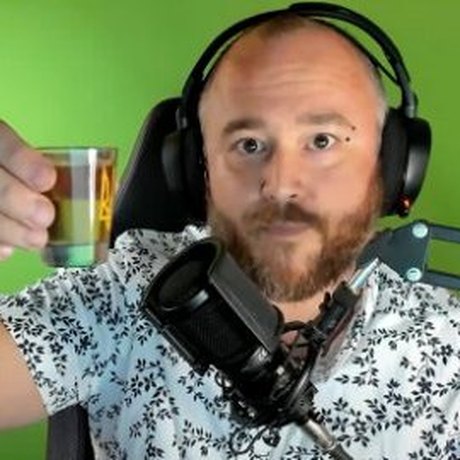
What happens when a 22-year-old from a small town in West Michigan decides, with almost no planning and no cell phone, to fly halfway around the world to teach English in South Korea? She spends the next 20 years trying to decode what actually happened to her. That is the short version of Renae Ninneman’s story, and it turned into one of the most thought-provoking conversations I’ve had on the show.

Renae is the founder of Beyond Tourism, a community radio DJ at KZUM 89.3 FM in Nebraska, and a doctoral student studying cultural intelligence. We got into what it was really like to land in Seoul in 2004 with no phone, no language skills, and no way to even tell her parents she had arrived safely. We also talked about why coming home was harder than leaving, and why she thinks most Americans are missing a skill that could change how they connect with the rest of the world.

Moving to South Korea at 22 With No Cell Phone

Renae grew up in West Michigan in a pretty homogenous community where international travel was not really encouraged. When she announced in college that she wanted to go to South Korea, nobody, including her parents, really knew what to do with that. This was 2004. Cell phones were barely a thing in the United States, and the entire job hunt and interview process happened over early internet. She flew halfway around the world and her parents found out she had landed safely two or three days later when she finally got around to emailing them from her new job.

Interestingly, South Korea was already way ahead of the US technologically. People were watching TV on their phones in 2005. But Renae still had to navigate by landmarks and paper maps. She had one year to figure it out, and she used it to travel to China, Vietnam, and India while she was out there.

The Cultural Rules Nobody Explains

One of the things that stuck with me from our conversation is how Renae describes cultural rules as invisible. When she started her job in Seoul, someone told her not to look her boss directly in the eyes because it was disrespectful. Nobody told her why. That was it. Just a rule dropped on her with no context.

For an American, that is wild. Here, if someone does not look you in the eye, we read it as shady or disengaged. In South Korea, looking a superior directly in the eye is the disrespectful move. Same action, completely opposite meaning. And Renae points out that this is not a weird one-off. This is how most cultural differences work. They are not explained. They are just absorbed, and if you break them, you often never even find out.

Reverse Culture Shock and the Books That Changed Her Brain

When Renae came back to the United States after a year abroad, she expected to slide back into her old life. Instead, she got hit with reverse culture shock. She describes it as confusing, disorienting, and identity-shaking. She did not know who she was anymore, and she could not explain what had happened to her during her year in Seoul.

That is when she started reading about cultural intelligence, and it completely rewired how she saw her experience. Concepts like power distance, direct versus indirect communication, and neutral versus expressive cultures gave her the vocabulary she had been missing. Suddenly she could describe the things that had been confusing her for months. She calls it empowering, and it set her on a 20-year path of working with refugees, studying culture, and eventually starting her own business.

Why Americans Come Across as “Aggressively Friendly”

This part of the conversation cracked me up, but it also made me think. Renae explained that Americans tend to communicate warmth through expressiveness. We smile at strangers, we make small talk with the cashier, we ask how your weekend was. To someone from a more neutral culture, this reads as fake at best and aggressive at worst. They might actually think you are trying to become their best friend when you are really just being polite.

I shared my own flip side of this. I went to Alabama for a work trip once and some guy across the street just started waving at me and my coworker like he knew us. My first reaction was, what is wrong with this guy? That is Philly energy talking. We are a little more neutral in the northeast. Renae pointed out that culture is not just national. It varies regionally, and what reads as friendly in one state can feel weird or suspicious in another.

Cultural Intelligence Is a Skill You Can Build

Here is the part of the conversation I want people to really sit with. Renae believes cultural intelligence is a skill, just like emotional intelligence or cognitive intelligence. It is not about memorizing a list of facts about a country. It is about self-reflection first. You have to understand that you act the way you do because of your own cultural programming. Once you can see your own defaults, you can start to see other people’s defaults without judging them as wrong.

She made the point that culture is a social construct. Eye contact has no inherent moral value. A firm handshake has no inherent moral value. We invented those meanings, and then we assigned good and bad to them. Once you realize that, it gets a lot easier to meet people where they are instead of demanding they meet you where you are.

Food, Music, and the Universal Language

We also got into the fun stuff. Renae still eats Korean food almost every day, 20 years later. Her favorites are tteokbokki and kimbap, and she built up a serious spicy food tolerance while she lived there. We compared notes on sushi conveyor belts, Japanese versus Korean food, and the fact that I apparently need to find one of those sushi belt restaurants in Philly or drive to New York for it.

Renae has been hosting a radio show called The Language of Music on KZUM 89.3 FM for 13 years. She plays music from all over the world, and she says it has made her better at geography, given her instant conversation starters with people from other countries, and reinforced the idea that music is one of the few things that really transcends language. You do not need to understand the words to dance, and you do not need to share a culture to feel something when a song hits.

If You Are Struggling Abroad, This Is for You

I asked Renae what she would want someone to hear if they were listening to this episode as an expat or immigrant, feeling lost or frustrated or lonely. Her answer was simple. What you are feeling is normal. Culture shock is not a cute inconvenience. It is a real, painful experience, and anyone who has spent meaningful time in a new country knows that. The reward on the other side is the ability to adapt, the ability to connect with people who grew up completely differently from you, and the realization that the human experience is bigger than your hometown.

That last part is what stuck with me the most. At the end of the day, what makes us human is being able to bond across all the things that should keep us apart. We grew up in different places and were handed different rules, but underneath that we are all running the same software.

Where to Find Renae and Beyond Tourism

You can learn more about Renae’s work at goingbeyondtourism.com, where she offers cultural communication skills packages for immigrants in the United States and coaching for expats heading abroad. You can also catch The Language of Music Sunday afternoons on KZUM 89.3 FM in Nebraska.


Listen to the full episode of the Drink O’Clock Podcast wherever you get your podcasts. Follow us on all socials at @DrinkOClockPod.

Want to be a guest on Drink O’Clock? Send us a message on PodMatch here: podmatch.com/hostdetailpreview/drinkoclock